
The Reality of Holidays for a Child With Reactive Attachment Disorder — and How We Learned to Let Go of the Dream
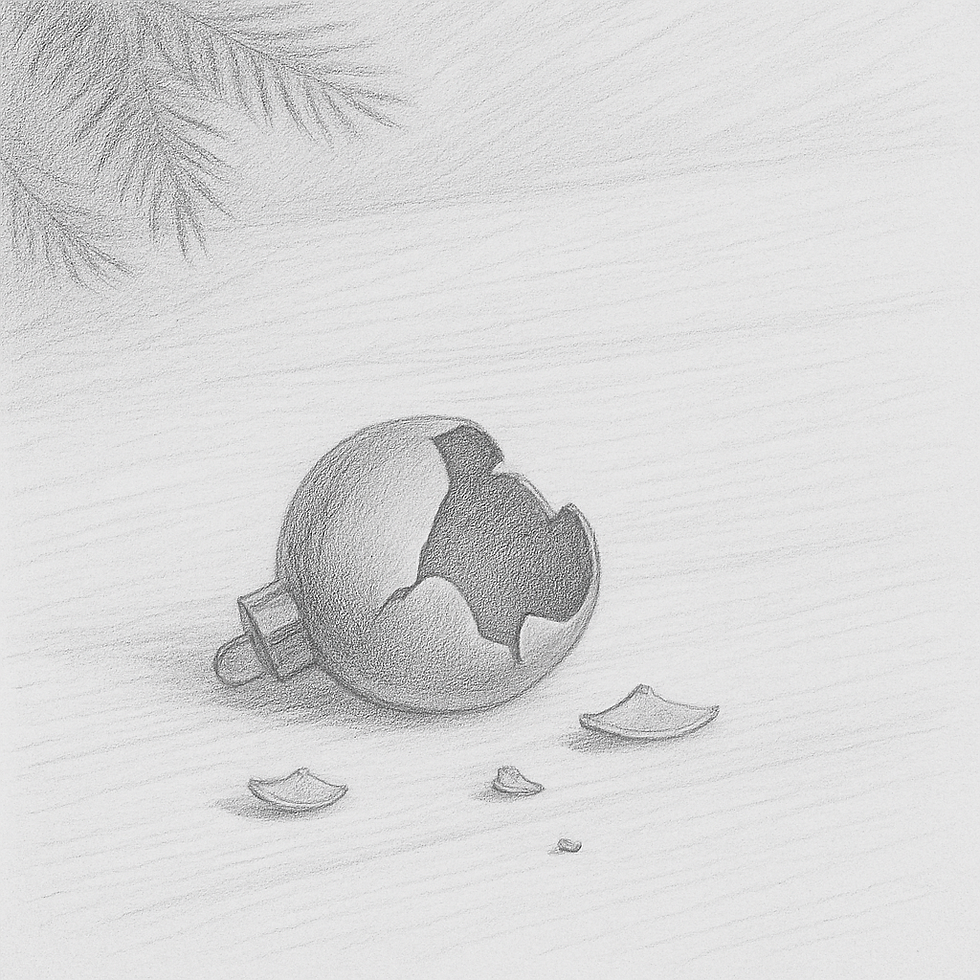
For years, I held tightly to the dream of what Christmas should look like. Before our foster and adoption journey, I imagined Martha Stewart–esque holidays: baking cookies and pies with my children, crafting handmade decorations, drinking hot cocoa, and watching my kids squeal with delight as they unwrapped presents. I pictured big family gatherings filled with warmth, joy, and easy laughter. It was a lovely dream — and it sadly remains just that.
When my husband and I began this journey, we had no idea reactive attachment disorder — also known as developmental trauma disorder — even existed. We didn’t know we were stepping into a life that would challenge everything we believed about love, safety, and family.
What we didn’t understand then was that holiday dreams only come true when everyone’s felt sense of safety is intact. And that deep, internal sense of safety had never formed for them — not even once they were finally safe in our home. If you’re newer to understanding how trauma changes the brain, we talk more about that in “How Trauma Impacts the Brain (AKA the Best Explanation of Developmental Trauma/Reactive Attachment Disorder).”
The Christmas That Changed Everything
The first Christmas with our boys should have been magical. Joe*, our son who would later be diagnosed with severe reactive attachment disorder/developmental trauma disorder, desperately wanted Tinkerbell. He was 2 and had been living with us for about six months with his two biological siblings. Tinkerbell was all he talked about. Being a “good mom,” I bought him a plush Tinkerbell, wrapped it, and placed it lovingly under the tree.
On Christmas morning, I waited with that familiar hope — imagining the magic I’d always pictured. He reached for the package. He ripped it open.
And then all hell broke loose.
What we didn’t understand then was that holiday dreams only come true when everyone’s felt sense of safety is intact. And that deep, internal sense of safety had never formed for our children before we adopted them — not even once they were finally safe in our home.
The first thing he saw were Tinkerbell’s feet. Joe screamed in terror, threw the doll across the room, and burst into sobs. At the time, I had no idea what could cause such a dramatic, traumatic reaction. Years later, his older brother told us they used to hide under beds when adults came over, seeing only feet when people were fighting.
Joe was inconsolable. Present unwrapping stopped for hours. The Tinkerbell went in the trash. When we resumed, he refused to open anything, so we unwrapped his gifts in another room and handed them to him unwrapped.
Looking back, it should have been our first sign — holidays would not look like the ones we’d imagined. But we kept trying to salvage the dream. That confusion of “something is really wrong here, but nobody explains it” will sound familiar to many families; we share more of that experience in “One Family’s Journey Through Reactive Attachment Disorder — We Knew Something Was Wrong, but No One Would Listen.”
A decade and a half later, the early holidays blur together — one chaotic, heartbreaking attempt after another — until my husband finally said the words we needed to hear: “We had to define the holiday instead of letting the holiday define us.”
That moment marked a turning point.
Why Holidays Are So Hard for Children With Reactive Attachment Disorder
Families living with developmental trauma disorder navigate a reality most people cannot see. Children with RAD/DTD often struggle with:
• Fear of closeness — intimacy feels dangerous, especially with the primary caregiver, the “nurturing enemy.” If you're unfamiliar with the term, you can read more about it in our post "What It Feels Like to be a Nurturing Enemy to a Child with Developmental Trauma (a.k.a. Reactive Attachment Disorder)."
• Need for control — when early caregivers weren’t safe, controlling everything becomes a survival strategy.
• Unpredictability activation — holidays involve schedule changes, surprises, new people, and sensory overload.
• Grief and mixed emotions — holidays can remind them of loss, instability, and past trauma.
Put all of that into one room — add extended family, expectations, and pressure to “make memories” — and the chaos becomes inevitable, not shocking.
This understanding didn’t come to us overnight — it came through lived experience, trial, and more errors than I can count. For many of us, our own brains change in response to the constant stress, too. We explore that more in “My Son’s Childhood Trauma Shaped His Brain — And Shattered Mine.”
What We Changed to Make Holidays With Developmental Trauma Survivable
1. Schedules: The Structure Children With Developmental Trauma Need
Children with developmental trauma crave predictability because it creates a sense of safety. Holidays — with their ever-changing routines — can activate fear and overwhelm.
So we kept our home as structured as possible. Wake times stayed the same. Meals happened at the same times. Once school was in the mix, we added worksheets and activities during what would have been the school day. It was exhausting for us, but it softened the chaos.
We also stopped giving advance notice for events. Joe would obsess if he knew something special was coming. It was easier to manage his reaction to a surprise event than to his disappointment when something didn’t happen. We became so good at this that we once made it to Disney World without the kids knowing where we were going.
A decade and a half later, the early holidays blur together — one chaotic, heartbreaking attempt after another — until my husband finally said the words we needed to hear: “We had to define the holiday instead of letting the holiday define us.”
We also limited holiday outings and built in “down days” — normal routine days that helped the kids stay regulated enough to handle anything special. That same need for structure and predictability shows up in other seasons, too; we share more practical ideas in “Handling Summer With Reactive Attachment Disorder: 7 Expert Tips From a Journeyed Parent."
2. Gift-Giving: When Intimacy and Surprises Feel Unsafe
Gift-giving is full of surprises and closeness — two things that can feel unsafe for a child with RAD/DTD.
As Joe got older, his need for control grew stronger. He would sneak around, search for presents, or open gifts early. One year, he picked locks and broke down doors to get to them.
And when gifts came from me — the primary caregiver — they triggered even more fear. If I gave him something special, he would reject it or destroy it.
Eventually, I gave the list of “good” gifts to extended family members, and my husband and I stuck to stocking stuffers and practical items. The first year we tried this, Joe got the video game he desperately wanted — from my brother — and for the first time, I saw joy on his face during a gift, safe enough to enjoy because it didn’t come from me.
Meanwhile, the snow boots and sled we gave him were broken before they ever touched the snow.
Eventually, we let Joe choose his own gifts. We didn’t hand him money — instead, we gave him a trip to the store with a set budget. It gave him control and spared us the heartbreak (and cost) of broken gifts.
3. Large Gatherings: A Hidden Source of Stress and Triangulation
Large gatherings are full of unfamiliar people who don’t understand developmental trauma. Children with RAD/DTD are experts at reading a room — it’s survival. They can quickly identify who will pity them, who will ignore them, and who they can pull into conflict with their parents.
More than once, family and friends confronted us about Joe’s lies or behaviors. They were well-meaning but uninformed, and it created tension. It is nearly impossible to believe a child can create that level of chaos unless you’ve lived it.
The year we stopped attending large gatherings was the year my brother stood in my kitchen on Christmas Eve and yelled that I was a terrible parent who was ruining my family. Joe had raged — throwing utensils and breaking glasses — because he wasn’t allowed to have an “adult drink.”
He was 5 years old.
That was the end of big family Christmases for us.
4. Food: Survival Behaviors and Holiday Meals
Food is another common struggle. Children with developmental trauma may sneak, hoard, overeat, undereat, or reject food — especially if it’s made by the primary caregiver.
Traditional sit-down meals became too stressful. Joe would inevitably create chaos.
So we created a new tradition: all-day appetizers.
More than once, family and friends confronted us about Joe’s lies or behaviors. They were well-meaning but uninformed, and it created tension. It is nearly impossible to believe a child can create that level of chaos unless you’ve lived it.
We set out the kids’ favorite finger foods and replenished them throughout the day. Surprisingly, these became some of my favorite holiday memories — moments with no food battles, no pressure, no meltdowns. Many Christmases were powered by mozzarella sticks and pigs in a blanket — and honestly, that was just fine.
What Peace Finally Looked Like for Our Holidays
It took us years of chaos and trial and error to reach a place of relative calm. RAD Advocates didn’t exist in those early days — but if they had, we would have navigated holidays with far less pain, and maybe avoided the knocked-over trees, broken doors, and destroyed gifts.
Our holidays never looked like the dream I held onto at the beginning — but once we accepted that structure, safety, and simplicity mattered more than fantasy, we found something better: peace.
People who didn’t understand criticized us — but our family’s safety and sanity always came first. We did what worked for us.
If your holidays don’t look like the ones in commercials or Christmas cards, you’re not alone. You’re not doing it wrong. You’re parenting a child whose trauma rewrote their sense of safety — and adapting the holidays to support that is something to be proud of.


Comments